The Gambia and the Atlantic Slave Trade
Gambia Vibes · Heritage · The slave trade
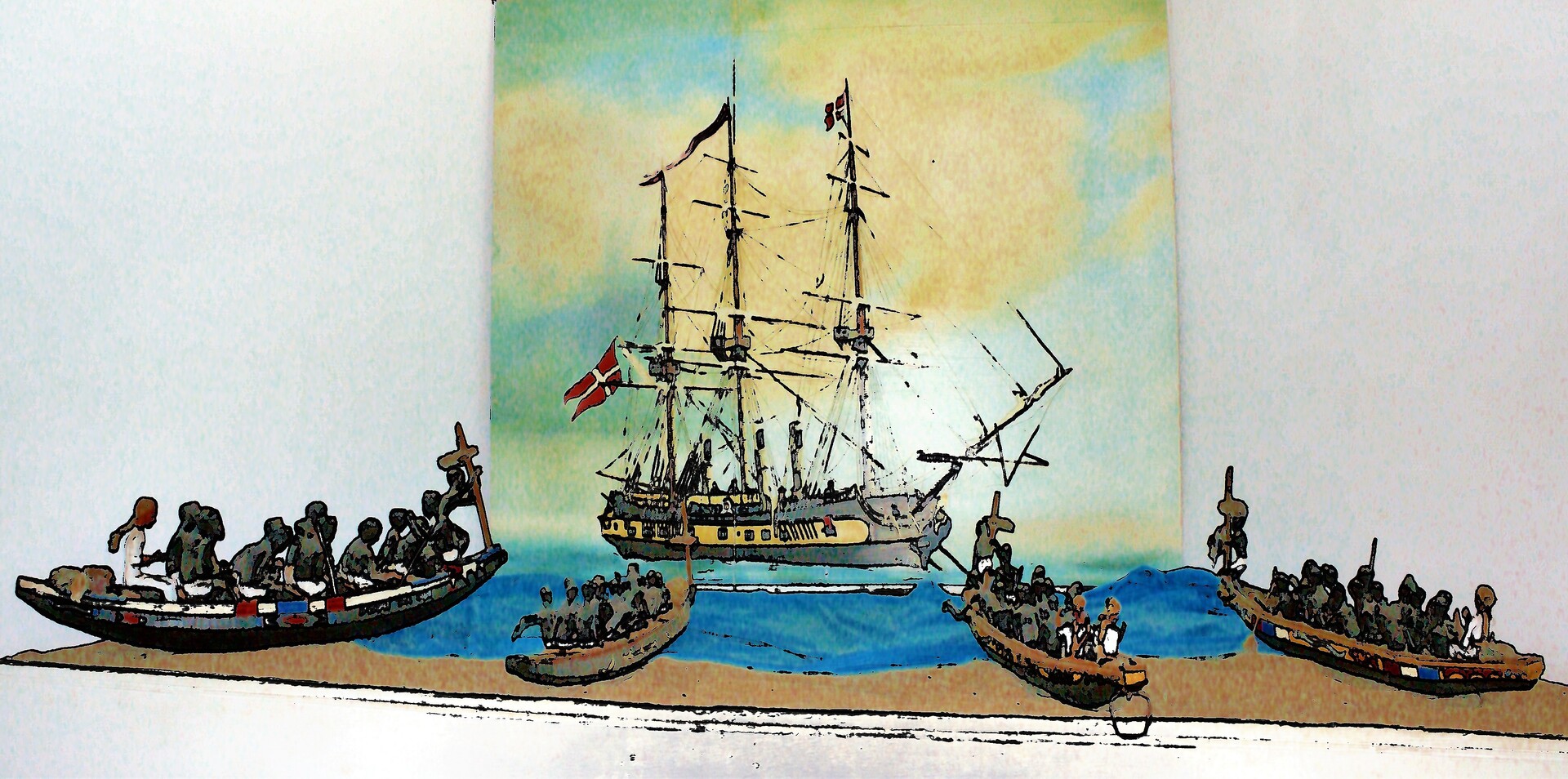
For four centuries the Gambia River was one of the great highways of the Atlantic slave trade. It was navigable for ships far inland, it reached deep into the West African interior, and every European power with Atlantic ambitions wanted a foothold on it. The result was a river lined with forts, trading posts and markets, and a trade in which Europeans and African rulers both played their parts.
This is the history behind the sites you visit: Kunta Kinteh Island, Albreda, Juffureh. It is told here as honestly as we can, without the marketing.
Search our Network. Start here.
At a glance
- When: from the arrival of the Portuguese in the 1450s to the 19th century
- Who traded: Portuguese and Afro-Portuguese, English, French, Dutch, even the Duchy of Courland, and African kingdoms and merchants along the river
- Scale: estimates for the wider Senegambia region run from about half a million people (historian Paul Lovejoy, 1650–1900) to higher figures in the Trans-Atlantic Slave Trade Database
- Key sites: Kunta Kinteh Island, Albreda and Juffureh, San Domingo, Fort Bullen
- End: Britain outlawed its trade in 1807; Bathurst (Banjul) was founded in 1816 partly to police the river
The Portuguese and the first trade
Portuguese ships reached the mouth of the Gambia in the 1450s. They came looking for gold and found a river that ran hundreds of kilometres inland. Trade began in gold, ivory, hides, beeswax and, from the beginning, people. Portuguese traders settled along the river, married into local families, and over generations created an Afro-Portuguese trading community whose traces survive in names and in the ruins at San Domingo near Albreda.
The European scramble for the river
From the 17th century, the northern European powers moved in. The Duchy of Courland built the first fort on what became James Island in 1651. The English seized it in 1661. The French set up their post at Albreda, opposite, in the 1680s. For more than a century, English and French watched each other across the water and fought over the river whenever their kings went to war.
Under the Royal African Company, and from 1750 the Company of Merchants Trading to Africa, Fort James became Britain's main base on the river. It was the same company that ran Cape Coast Castle on the Gold Coast. The ledgers of the two coasts sat in the same London offices.
African kingdoms and merchants
The Europeans did not capture most of the people they bought. They bought them from African rulers and merchants. Along the river lay Mandinka, Wolof, Fula, Serer and Jola states, among them Niumi at the mouth, Kombo, and further inland the kingdoms tied to the Mandinka empire of Kaabu. Captives came from wars, raids, judicial punishments and debt, and many were marched to the river from far inland, sometimes from as far as the upper Niger.
The kings of Niumi, who owned the island where Fort James stood, collected duties from European ships. Traders known as juula moved captives along overland routes to the river markets. Some states grew rich and powerful on the trade. Others were raided and emptied by it.
Saying that African elites took part is not the same as saying they were equally responsible. The trade was financed, shipped and driven by European demand, and where the demand stopped, so did the supply. Both things are true at once.
Timeline
| When | What happened |
|---|---|
| 1450s | Portuguese ships reach the Gambia River. |
| 1651 | Courland builds Fort Jacob on the island. |
| 1661 | The English seize it: James Island and Fort James. |
| 1680s | The French establish their post at Albreda. |
| 1684 | The Royal African Company takes over the Gambia trade. |
| 1750 | The Company of Merchants Trading to Africa takes over Fort James. |
| c. 1767 | Kunta Kinte, in Alex Haley's account, is captured near Juffureh. |
| 1807 | Britain outlaws its slave trade. |
| 1816 | Bathurst (Banjul) is founded, partly to stop slave ships on the river. |
| 1823 | Georgetown on MacCarthy Island is founded for freed Africans. |
| 1867 | Kansala, the capital of Kaabu, falls to Futa Jallon. |
Where they were taken
People shipped from the Gambia and the wider Senegambia region were carried to the Caribbean, to Brazil and Spanish America, and in significant numbers to mainland North America, especially in the 18th century. Some historians argue that the rice-growing skills of enslaved Senegambians shaped the plantation economy of South Carolina and Georgia. Others think that argument goes too far. Either way, the Gambia region has a special place in African-American memory, made far stronger by Roots. Read Kunta Kinte: the man, the book and the legend.
Abolition, and what came after
After Britain outlawed its slave trade in 1807, the Royal Navy began patrolling West African waters. In 1816 Captain Alexander Grant founded Bathurst on an island at the river mouth, with guns covering the channel. Fort Bullen at Barra and the Six-Gun Battery in Banjul closed the river to slavers. In 1823 Georgetown on MacCarthy Island was founded as a settlement for freed Africans.
But the end of the Atlantic trade was not the end of slavery. Slavery and slave trading inside the region continued through the 19th century, and in the interior it persisted well into the colonial period. That part of the story is rarely told at the heritage sites.
History, memory and the tour script
Heritage tourism brings visitors and money, and that creates pressure to tell a simpler, more dramatic story. On the Gambia River, guides may show you "slave houses" that were never used for the trade. You will hear legends told as facts, and see the long African role in the trade left out. The Janjanbureh "slave house" is one example. The real history is more than enough. It does not need to be improved.
Two coasts, one trade
If you have stood in the dungeons of Cape Coast or Elmina in Ghana, the Gambia River completes the picture: the same companies, the same ships, often the same captains. The Gambia, Sierra Leone and the Gold Coast were long governed together, and in the 19th century Gambian soldiers fought in Britain's wars against the Asante. On the Ghana side, read Who sold whom? Ghana's slave history without the marketing, Tracing the slave routes of Ghana and West Africa and The transatlantic slave trade: European greed, African power.
Walk the history with a guide. Roots tours to Kunta Kinteh Island, Albreda and Juffureh are run by local operators in The Gambia. Entrance fees are already included in the tour price. Tips for your guide, driver and boat crew are not included, but they are always welcome.
More Gambian heritage
- Kunta Kinte: the man, the book and the legend
- Gambian soldiers in Britain's wars against the Asante
- Charles MacCarthy
- The Gambia and the Gold Coast: one British West Africa
- Independence 1965 and the Senegambia Confederation
- Kunta Kinteh Island
- Juffureh and Albreda
The Gold Coast side of the story
Across the network
Sources: Paul E. Lovejoy, Transformations in Slavery (2000), Senegambia estimate 1650–1900. Trans-Atlantic Slave Trade Database (slavevoyages.org). UNESCO World Heritage evaluation, "James Island and Related Sites" (No. 761 rev). J. M. Gray, A History of the Gambia (1940). Boubacar Barry, Senegambia and the Atlantic Slave Trade (1998). Judith Carney, Black Rice (2001), and its critics.
Gambia Vibes · Part of the Ghana-Net network · Updated and fact-checked: 6 November 2026