Juffureh and Albreda
Gambia Vibes · Destinations · UNESCO World Heritage
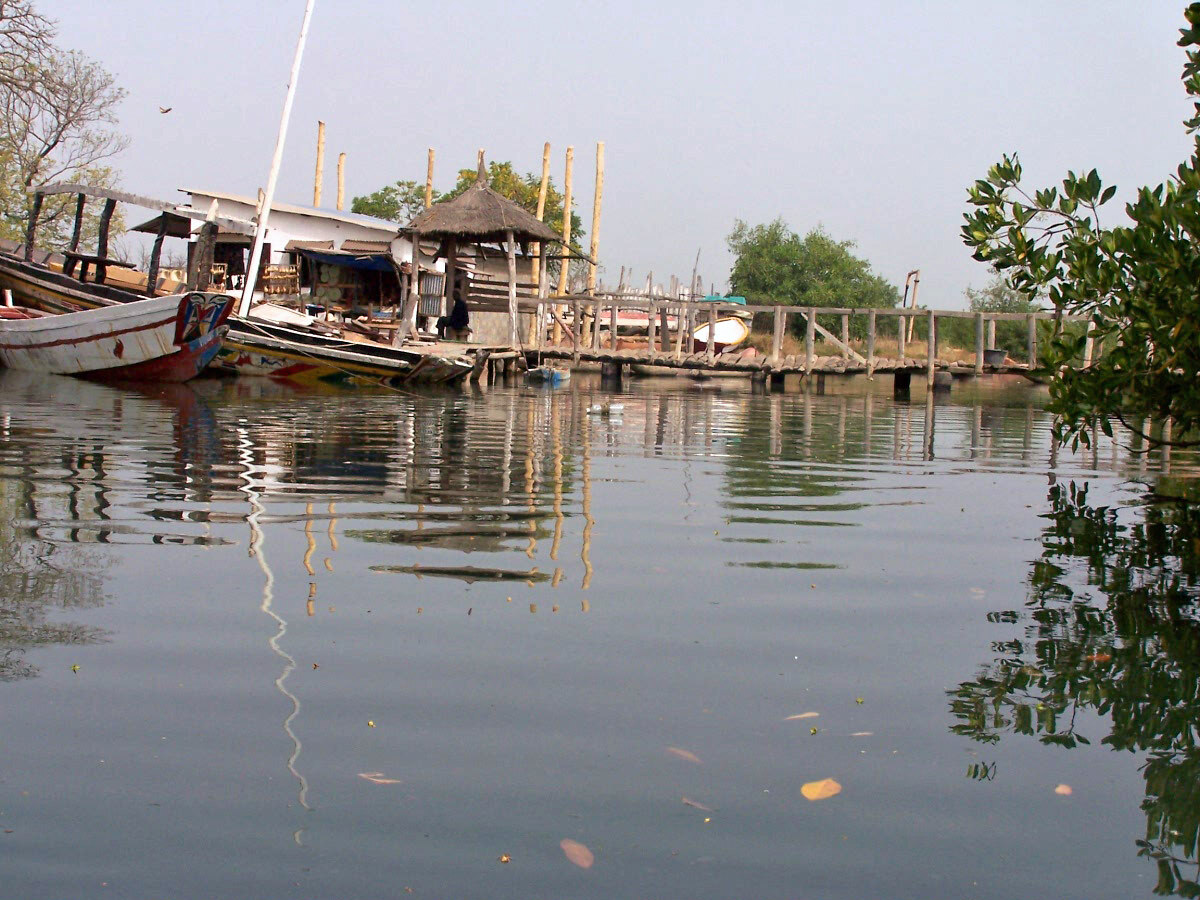
Two villages on the north bank of the Gambia River, a short walk apart. One, Juffureh, became world famous in 1976 as the home of Kunta Kinte in Alex Haley's Roots. The other, Albreda, was for more than a century a French trading post in the middle of British-controlled water. Together with Kunta Kinteh Island offshore, they form one of the most visited heritage sites in West Africa.
They are also places where history, legend and tourism business are tightly knotted together. Here is how to untangle them.
Search our Network. Start here.
At a glance
- Where: north bank of the Gambia River, North Bank Region, opposite Kunta Kinteh Island
- UNESCO: part of "Kunta Kinteh Island and Related Sites", inscribed in 2003
- Albreda: former French trading post, with the national museum on the slave trade and the "freedom flagpole"
- Juffureh: the village Alex Haley identified as Kunta Kinte's home, with the Kinte family compound
- Nearby: the Portuguese ruins at San Domingo, Fort Bullen at Barra
- Capital: Banjul, across the river mouth
Albreda: a French post on a British river
From the 1680s the French held a small trading post at Albreda, granted by the rulers of Niumi, who controlled this stretch of the north bank. It sat in sight of the English at Fort James. The two powers watched each other across the water, competed for the same trade in gold, ivory, beeswax and enslaved people, and attacked each other's posts whenever their kings went to war in Europe.
The French post survived, on and off, until 1857, when France gave Albreda to Britain in exchange for rights elsewhere in Senegal. What remains today is the old trading house, ruins and a village that still remembers its strange double history.
The museum
Albreda is home to the national museum on the slave trade. It tells the story of capture, the march to the river, the holding on the island and the Atlantic crossing, with a section on Roots and Alex Haley, photographs and memorabilia. Admission usually includes the boat trip and entry to Kunta Kinteh Island. It is a small museum, and some displays are worn, but it is the best place to put the island in context before you go out to it.
The freedom flagpole
Near the shore stands a flagpole. Guides will tell you that in the time of the slave trade, any enslaved person who escaped and touched it was declared free. The story is told with conviction, and it is part of the visit. But treat it as a local tradition rather than documented history. Its link to Britain's abolition of the trade after 1807, when British ships patrolled the river against slavers, is the more likely origin of the idea.
Juffureh: the Roots village
In Roots, Alex Haley traced his family back to a young Mandinka man named Kunta Kinte, captured near Juffureh around 1767 and taken to Maryland. Haley visited the village in 1967, met a griot who recited the Kinte family history, and wrote a book that became one of the most influential of its century. The television series of 1977 was watched by well over a hundred million people.
Since then, Juffureh has been a place of pilgrimage. Visitors are shown the Kinte family compound and meet members of the family who claim descent from Kunta Kinte's relatives. The International Roots Homecoming Festival has brought diaspora visitors here repeatedly over the years.
History and legend
Haley's genealogy has been questioned by historians and genealogists since the late 1970s. Critics argued that the griot's account may have been shaped by what Haley was looking for, and that the documentary trail to a single named man is weak. Haley himself called the book "faction", a blend of fact and fiction.
None of that changes what happened on this river. Thousands of real people were taken from the Gambia region and shipped across the Atlantic. Kunta Kinte stands for them. Visit Juffureh as a memorial to all of them, not as proof of one family tree. More in Kunta Kinte: the man, the book and the legend.
San Domingo and Fort Bullen
A little way from Albreda lie the ruins at San Domingo, linked to the Portuguese and Afro-Portuguese traders who were on the river long before the English and French. At Barra, by the ferry terminal, stands Fort Bullen, built by the British in the 1820s to command the river mouth and stop slave ships after abolition. With the Six-Gun Battery in Banjul, it closed the river on both sides. Both are part of the UNESCO site.
An honest word about the visit
Juffureh is a poor village that has lived with tourism for fifty years. Expect to be asked for donations, to be offered "family" meetings and to see a lot of craft stalls. Give what you think is fair, but agree before you set off what your tour includes. Ask before photographing people, and dress modestly. This is a living village and a place of memory, not a film set.
How to visit
Most visitors come on a full-day "Roots" tour from the coast. There are two ways:
- By land: the ferry from Banjul to Barra, a visit to Fort Bullen, then about 25 km by road to Albreda and Juffureh, and a boat to the island.
- By river: a boat from Denton Bridge or Lamin, up the river to Albreda, the island and back. Longer on the water, but more comfortable and very beautiful.
Take water, a hat and sun cream; there is little shade. Ferries can be slow and crowded, so leave early. The dry season, November to May, is the best time. See getting around The Gambia and the best time to visit.
Visit Juffureh, Albreda and the island with a guide. These Roots tours are run by local operators in The Gambia. Entrance fees are already included in the tour price. Tips for your guide, driver and boat crew are not included, but they are always welcome.
One river, two coasts
The same British company that ran Fort James across the water, the Company of Merchants Trading to Africa, also ran Cape Coast Castle on the Gold Coast. If you have stood in the dungeons at Cape Coast or Elmina, Albreda and Juffureh show you the other end of the same trade. Read The Gambia and the Atlantic slave trade, and on the Ghana side, Who sold whom? Ghana's slave history without the marketing.
More from The Gambia
- Kunta Kinteh Island, the former James Island
- Kunta Kinte: the man, the book and the legend
- The Gambia and the Atlantic slave trade
- Banjul, the capital
- Wassu Stone Circles
- Tipping in The Gambia
The Gold Coast side of the story
Across the network
Sources: UNESCO World Heritage evaluation, "James Island and Related Sites" (No. 761 rev). Lonely Planet, National Museum of Albreda. Rahier, Roots heritage tourism in Juffureh. J. M. Gray, A History of the Gambia (1940). Alex Haley, Roots (1976).
Gambia Vibes · Part of the Ghana-Net network · Updated and fact-checked: 6 November 2026