Kunta Kinte: the Man, the Book and the Legend
Gambia Vibes · Heritage · Roots
Few people from West African history are as famous as Kunta Kinte, and few are as uncertain. He is the young Mandinka man from Juffureh who, in Alex Haley's Roots, is captured in 1767, shipped to Maryland, and refuses for the rest of his life to give up his name. Millions of people know him. An island is named after him. And historians still argue about whether he existed as Haley described him.
Both things matter: the man the book gave the world, and what the record actually shows.
Search our Network. Start here.
At a glance
- The book: Roots: The Saga of an American Family, Alex Haley, 1976
- The series: ABC television, 1977, one of the most watched broadcasts in US history
- The story: Kunta Kinte, from Juffureh, captured in 1767, taken on the ship Lord Ligonier to Maryland
- The doubts: genealogists and historians questioned the griot, the records and the link to Haley's family
- The legacy: James Island renamed Kunta Kinteh Island in 2011; Juffureh a place of pilgrimage
The story Haley told
Alex Haley grew up hearing his grandmother's family stories, passed down from an African ancestor called "the African", who called a guitar a "ko" and a river "Kamby Bolongo". Haley took those few words, which he believed were Mandinka, to linguists, who pointed him to the Gambia River. In 1967 he travelled to The Gambia and was taken upriver to Juffureh. There a man named Kebba Kanga Fofana, presented as a griot, a keeper of oral history, recited the history of the Kinte clan. At the point where Haley's own family story began, the griot told of a young man named Kunta who had gone into the forest to cut wood and was never seen again.
Haley wrote that he broke down in tears. He then traced, he said, the slave ship Lord Ligonier from the Gambia River to Annapolis, Maryland, arriving in 1767. Roots was published in 1976, received a special Pulitzer award in 1977, and the television series that year changed how millions of Americans thought about slavery and Africa.
What the critics found
The problems began almost immediately.
- The griot. In 1977 the journalist Mark Ottaway, writing in The Sunday Times ("Tangled Roots"), reported that Kebba Kanga Fofana was not a trained griot and was known locally as unreliable. Later research found he had changed key details of the story.
- The circular source. In 1981 the historian Donald R. Wright published "Uprooting Kunta Kinte" in History in Africa. He argued that Haley's story had spread so widely in the area before the recital that Haley may have been hearing his own words repeated back to him.
- The American records. Also in 1981, the genealogists Gary B. Mills and Elizabeth Shown Mills examined the Virginia and Maryland records. They argued that the enslaved man Haley identified as Kunta Kinte, known as "Toby", appears in documents from before the Lord Ligonier arrived, which would break the link.
- The novel. The writer Harold Courlander sued Haley, saying passages of Roots came from his 1967 novel The African. Haley settled out of court in 1978 and acknowledged that some material had found its way into his book.
Haley defended the book as "faction", a mix of fact and fiction, and as a symbolic history of a people whose real records had been destroyed by slavery.
What is fair to say
The specific chain from Juffureh to Haley's family is unproven, and much of it is probably wrong. But the historian John Thornton has pointed out that a man named Kunta Kinte could quite plausibly have lived on the Gambia River in the 1700s and been enslaved. Thousands of real people were. The Lord Ligonier did carry captives from the Gambia to Annapolis in 1767.
Kunta Kinte may not be one proven man. He is a true picture of what happened to many.
Why the name still matters
Before Roots, most Americans, Black and white, had little sense that enslaved people came from real places, with real names, families and languages. Haley's book gave the African ancestor a face, a village and a refusal: Kunta never accepts the name "Toby". That refusal, more than any detail of genealogy, is why the story lasted.
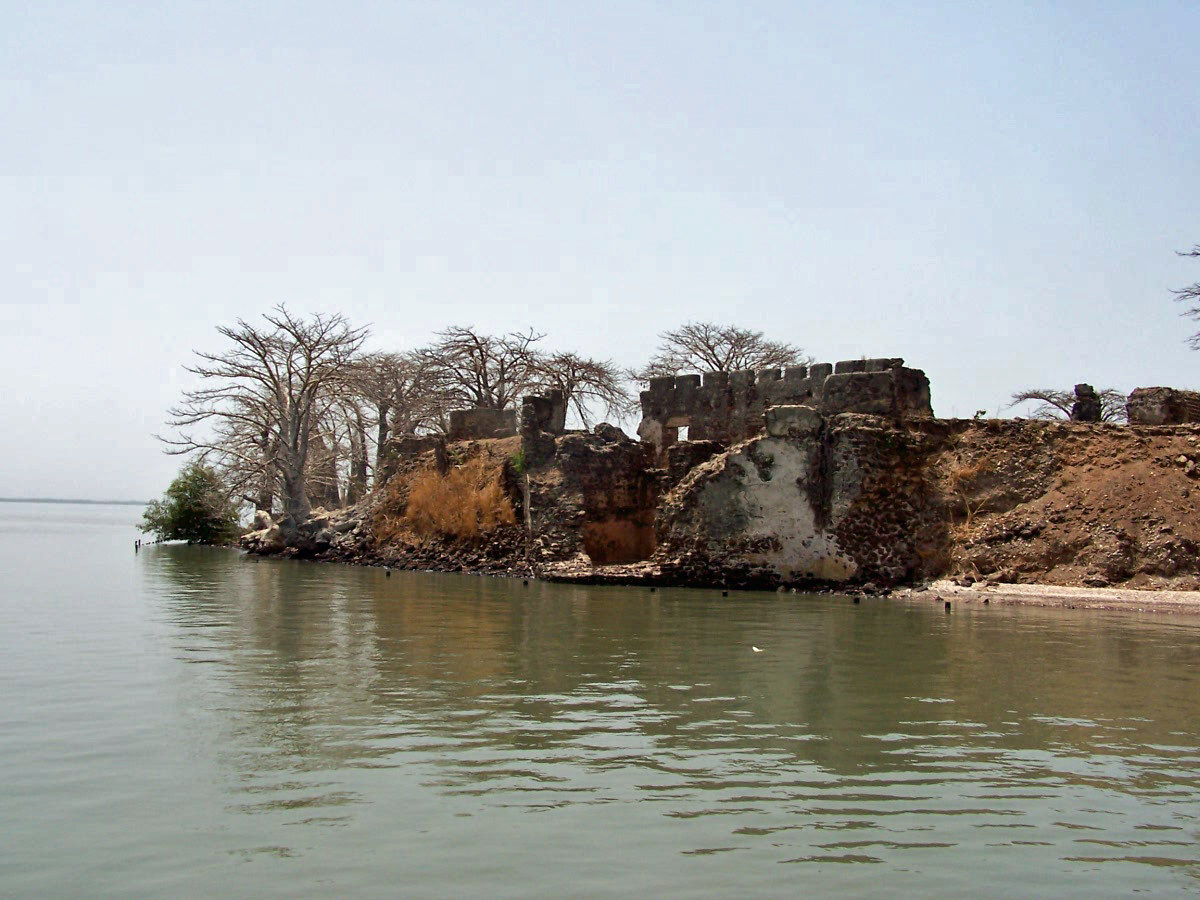
In The Gambia, Roots brought pilgrims, a heritage-tourism industry and international attention to the river's slave-trade history. In 2011 James Island was renamed Kunta Kinteh Island. In Juffureh, members of the Kinte family still receive visitors at the family compound. See Juffureh and Albreda.
Visiting with open eyes
At Juffureh you will be told the story as fact. You do not have to argue with anyone. Listen, respect the family and the place, and remember the larger truth: the people taken from this river were real, whatever their names were. The best way to honour Kunta Kinte is to learn their history properly. Start with The Gambia and the Atlantic slave trade.
Follow the Roots trail. Tours to Juffureh, Albreda and Kunta Kinteh Island are run by local operators in The Gambia. Entrance fees are already included in the tour price. Tips for your guide, driver and boat crew are not included, but they are always welcome.
Ghana's "Roots" moment
Ghana has its own version of this story: the Year of Return in 2019, the "Door of No Return" at Cape Coast, and the promise to African-Americans of finding home. The same questions apply: where did people actually come from, and who tells the story? Read Who sold whom? Ghana's slave history without the marketing and visit Cape Coast Castle Museum.
More Gambian heritage
- The Gambia and the Atlantic slave trade
- Kunta Kinteh Island
- Juffureh and Albreda
- Gambian soldiers in Britain's wars against the Asante
- The Smiling Coast of Africa
Across the network
Sources: Alex Haley, Roots (1976). Mark Ottaway, "Tangled Roots", The Sunday Times, April 1977. Donald R. Wright, "Uprooting Kunta Kinte: On the Perils of Relying on Encyclopedic Informants", History in Africa 8 (1981). Gary B. Mills and Elizabeth Shown Mills, "Roots and the New 'Faction'", Virginia Magazine of History and Biography (1981). Kunta Kinte, overview of the debate.
Gambia Vibes · Part of the Ghana-Net network · Updated and fact-checked: 6 November 2026