Independence 1965 and the Senegambia Confederation
Gambia Vibes · Heritage · Independence
When The Gambia became independent on 18 February 1965, many people, in London and in Dakar, did not believe it would last. A sliver of land along a river, almost surrounded by Senegal, with groundnuts as its only real export: surely it would soon join its big neighbour. It nearly did. For seven years in the 1980s, The Gambia and Senegal were bound together as the Senegambia Confederation. Then it fell apart.
Search our Network. Start here.
At a glance
- Independence: 18 February 1965, from Britain, with Dawda Jawara as prime minister
- Republic: 24 April 1970, with Jawara as president
- Coup attempt: 30 July 1981, crushed with Senegalese troops
- Senegambia Confederation: 1 February 1982 to 30 September 1989
- Coup: 22 July 1994, Yahya Jammeh takes power; Jawara goes into exile
- Democracy returns: Jammeh defeated in the December 2016 election
- Capital: Banjul (Bathurst until 1973)
A small country nobody expected to survive
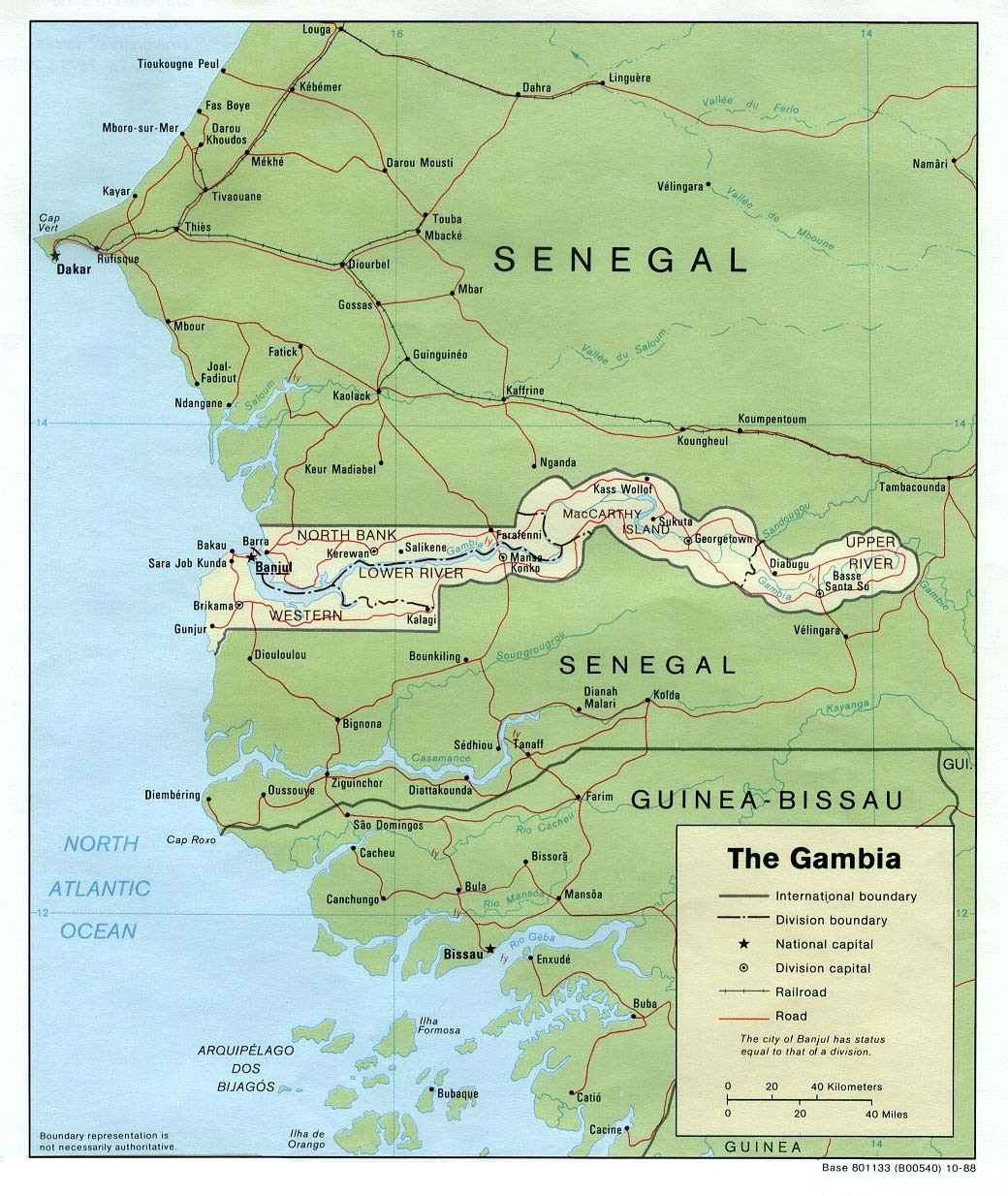
The Gambia's borders were drawn by British and French negotiators in the late 19th century: a strip of land on either side of the river, about ten kilometres from the water at its narrowest, reaching some 300 kilometres inland. To the north, east and south was French Senegal. The colony was poor, and Britain had long thought of trading it to France.
When independence came, it came quietly, without the drama of Ghana's in 1957. Led by Dawda Jawara, a veterinary surgeon trained in Glasgow, and his People's Progressive Party, The Gambia became independent on 18 February 1965, with the Queen still head of state. Five years later, on 24 April 1970, after a referendum, it became a republic, with Jawara as president. For the next 24 years he governed one of Africa's few lasting multi-party democracies, small, peaceful and poor.
30 July 1981: the coup that almost worked
While Jawara was in London for the wedding of Prince Charles, a group of rebels led by Kukoi Samba Sanyang, a left-wing revolutionary, seized key points in Banjul with the help of members of the paramilitary Field Force. They announced a "National Revolutionary Council", opened the prisons and armed civilians. Fighting and looting followed. Hundreds of people died; estimates vary widely.
Under a defence agreement, Jawara asked Senegal for help. Senegalese troops moved in, and after days of fighting the rebellion was crushed. Kukoi Samba Sanyang escaped abroad. The Gambia had been saved by its neighbour, and that had a price.
The Senegambia Confederation, 1982–1989
Within months the two countries signed an agreement, and on 1 February 1982 the Senegambia Confederation came into being. Senegal's president, Abdou Diouf, became president of the Confederation; Jawara became vice-president. There were plans for joint armed forces and security, coordinated foreign policy and, in time, an economic and monetary union.
In practice it never became a real union. The Gambia feared being swallowed by a country many times its size. Senegal was frustrated that The Gambia would not give up its own currency or its profitable re-export trade. Gambian traders made money bringing goods through Banjul and selling them on into Senegal, much of it smuggled, under lower tariffs. The two countries also had different languages of government, French and English, different legal systems and different colonial habits. A union of two governments, not two peoples, had little to hold it together.
On 30 September 1989 the Confederation was dissolved. Relations stayed close, but often tense, over borders, trade, transit and the Trans-Gambia road. The long-awaited Senegambia Bridge across the river at Farafenni finally opened in 2019.
Timeline
| When | What happened |
|---|---|
| 1889 | British and French agree the borders of the Gambia. |
| 18 Feb 1965 | Independence; Dawda Jawara prime minister. |
| 24 Apr 1970 | The Gambia becomes a republic; Jawara president. |
| 1973 | Bathurst is renamed Banjul. |
| 30 Jul 1981 | Coup attempt by Kukoi Samba Sanyang; Senegalese troops intervene. |
| 1 Feb 1982 | The Senegambia Confederation begins. |
| 30 Sep 1989 | The Confederation is dissolved. |
| 22 Jul 1994 | Military coup; Yahya Jammeh takes power. |
| Dec 2016 | Jammeh loses the election to Adama Barrow and leaves in January 2017. |
| 2019 | The Senegambia Bridge opens. |
| 5 Dec 2026 | Presidential election. |
1994 and after
Jawara's long rule ended on 22 July 1994, when a young army lieutenant, Yahya Jammeh, seized power in a bloodless coup. Jawara left the country. Jammeh ruled for 22 years, with growing repression, disappearances and fear, before losing an election in December 2016 to Adama Barrow. He refused at first to go, and left only in January 2017 under pressure from ECOWAS, with Senegalese troops once more on the move. The Arch 22 in Banjul still commemorates his coup. Read The Gambia: the country that voted out a dictator.
Two independences, compared
Ghana in 1957 was the first, loud, Pan-African: Nkrumah's "Ghana, your beloved country, is free for ever". The Gambia in 1965 was small, cautious and pragmatic: survive first, dream later. Yet in 2016 it was little Gambia that voted out a dictator at the ballot box, while bigger countries looked on. Read The Gambia and the Gold Coast: one British West Africa and, for Ghana, MyGhana2027.com.
See the history in Banjul. City tours of Banjul, with the National Museum and Arch 22, are run by local operators in The Gambia. Entrance fees are already included in the tour price. Tips for your guide and driver are not included, but they are always welcome.
More Gambian heritage
- The Gambia and the Gold Coast: one British West Africa
- The Smiling Coast of Africa
- The Gambia and the Atlantic slave trade
- Banjul, the capital
- Gambia travel advice and the 2026 election
Across the network
Sources: Arnold Hughes and David Perfect, A Political History of The Gambia, 1816–1994 (2006). Arnold Hughes, "The Collapse of the Senegambian Confederation", Journal of Commonwealth & Comparative Politics (1992). Senegambia Confederation. The Point: election on 5 December 2026.
Gambia Vibes · Part of the Ghana-Net network · Updated and fact-checked: 6 November 2026