The Gambian Coast
Gambia Vibes · Destinations · The Atlantic coast
The Gambia's coastline is short, about eighty kilometres from the river mouth at Banjul to the Senegalese border at Kartong. In that short stretch you pass from busy resort beaches with bars and bumsters, to fishing beaches where hundreds of boats come in at dusk, to empty sand where your footprints are the only ones. This is the coast that gave the country its nickname, the Smiling Coast. It has also been scarred.
Search our Network. Start here.
At a glance
- North, the resort coast: Bakau, Fajara, Kotu, Kololi (the Senegambia strip), Bijilo
- Middle, the fishing coast: Brufut, Tanji, Tujereng
- South, the quiet coast: Sanyang, Gunjur, Kartong
- Swimming: strong currents and few lifeguards; ask locally every time
- Best season: November to May, dry and sunny
- Capital: Banjul, at the northern tip
The resort coast
Bakau and Fajara
The oldest resort area, closest to Banjul. Bakau has a lively fishing beach, a craft market, the sacred Kachikally crocodile pool and cliffs above the sea. Fajara next door is greener and quieter, with old colonial-era houses and the Fajara War Cemetery, where soldiers of the Second World War lie, many of them West African. It is worth a quiet half hour. Ghana has a similar story: see the war cemetery at Cape Coast.
Kotu and Kololi
This is the heart of package tourism: big hotels, the "Senegambia strip" of bars, restaurants and clubs, and wide sandy beaches. It is convenient, safe enough and fun for a few days. It is also where the bumsters are most persistent and prices are highest. Read Gambia travel advice before you go.
Bijilo
Just south of Kololi lies Bijilo Forest Park, a small coastal forest with walking trails and plenty of monkeys, mainly green vervets and red colobus. The monkeys have become used to people, and many visitors feed them peanuts. Please don't. It makes them aggressive and unhealthy.
The fishing coast
Tanji
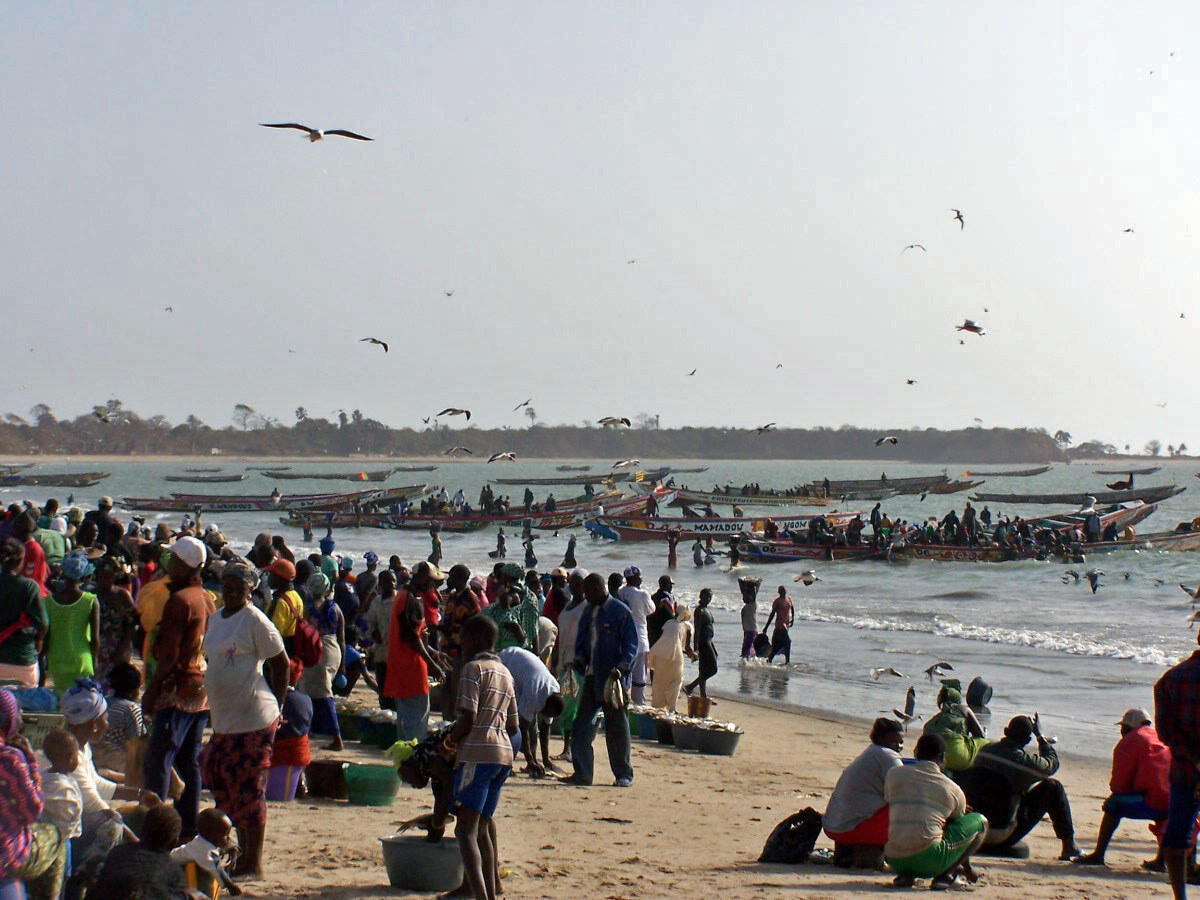
Arrive at Tanji in the late afternoon and you see the coast at its most alive. Hundreds of brightly painted pirogues come in through the surf. Men carry baskets of fish up the beach, women bargain, and the smoke of the fish-smoking houses hangs over everything. It is noisy, smelly and unforgettable. Ask before you photograph people, and respect a no.
Next to it, the Tanji Bird Reserve protects lagoons, dunes, woodland and the small Bijol Islands offshore. It is one of the best birding sites on the coast.
Brufut and Tujereng
Between the resorts and Tanji, large new hotels and gated developments are spreading along the cliffs and dunes. The coast is changing fast here, and not always for the better.
The quiet south
South of Tanji, the coast becomes wide, empty beaches backed by palms and bush: Sanyang, Gunjur and finally Kartong at the Senegalese border on the Allahein River. There are small eco-lodges, beach camps and fishing villages, and almost no tourist crowds. Kartong is a favourite with birdwatchers, with wetlands and a bird observatory. This is the coast many returning visitors come back for.
The honest part: fishmeal, sand and erosion
Since around 2015, foreign-owned fishmeal factories have operated in the fishing villages of Gunjur, Sanyang and Kartong, grinding small fish that West Africans eat into animal feed for export. In Gunjur, the Golden Lead factory discharged wastewater without approval and paid a US$25,000 out-of-court settlement in 2017. It was linked to the poisoning of the Bolong Fenyo lagoon. Local people and volunteers have since reported recurring blooms of rotting seaweed and dead fish on the beaches, with a smell that makes some stretches unbearable. Activists say the fines are too small to change anything, and the factories have kept operating.
Add illegal sand mining from the beaches, and erosion that is eating parts of the coast. Some hotels and villages are losing their beach.
None of this means you should stay away. It means you should know what you are looking at, ask your lodge about it, and support the local businesses and community clean-ups that are fighting back.
Swimming safely
The Atlantic here has strong currents and big waves, especially in the rainy season. Very few beaches have lifeguards. Swim only where your hotel or local people say it is safe, never after drinking, never alone, and stay out of the water at fishing beaches, where boats come in through the surf.
Choosing your beach
| Area | Best for | Keep in mind |
|---|---|---|
| Bakau / Fajara | Close to Banjul, history, local life | Rocky in parts |
| Kotu / Kololi | Hotels, nightlife, convenience | Bumsters, higher prices |
| Bijilo | Forest walk, monkeys | Don't feed the monkeys |
| Tanji | Fish market, birds | Busy, smelly, fascinating |
| Sanyang / Gunjur | Quiet beaches, lodges | Fishmeal pollution in places |
| Kartong | Peace, birding, the border | Far from shops and ATMs |
Explore the coast with a local guide. Tours along the coast, to Tanji, the bird reserves and the quiet south are run by local operators in The Gambia. Entrance fees are already included in the tour price. Tips for your guide and driver are not included, but they are always welcome.
Two coasts compared
If you know Ghana's beaches, you will recognise a lot here: the fishing pirogues, the smoke houses, the resort strips, and the erosion and pollution nobody puts in the brochure. Compare with our honest guide to Greater Accra's beaches and read Gambia vs Ghana: two Atlantic nations connected by history.
More from The Gambia
- The Smiling Coast of Africa: where the name comes from
- Abuko and Kachikally
- Banjul, the capital
- Best time to visit
- Is the water safe?
- Getting around
Across the network
Sources: Dialogue Earth, seaweed blooms and the fishmeal plants. The Outlaw Ocean Project, "The Smell of Money". Business & Human Rights Resource Centre on the protests. UK FCDO travel advice on swimming.
Gambia Vibes · Part of the Ghana-Net network · Updated and fact-checked: 6 November 2026